
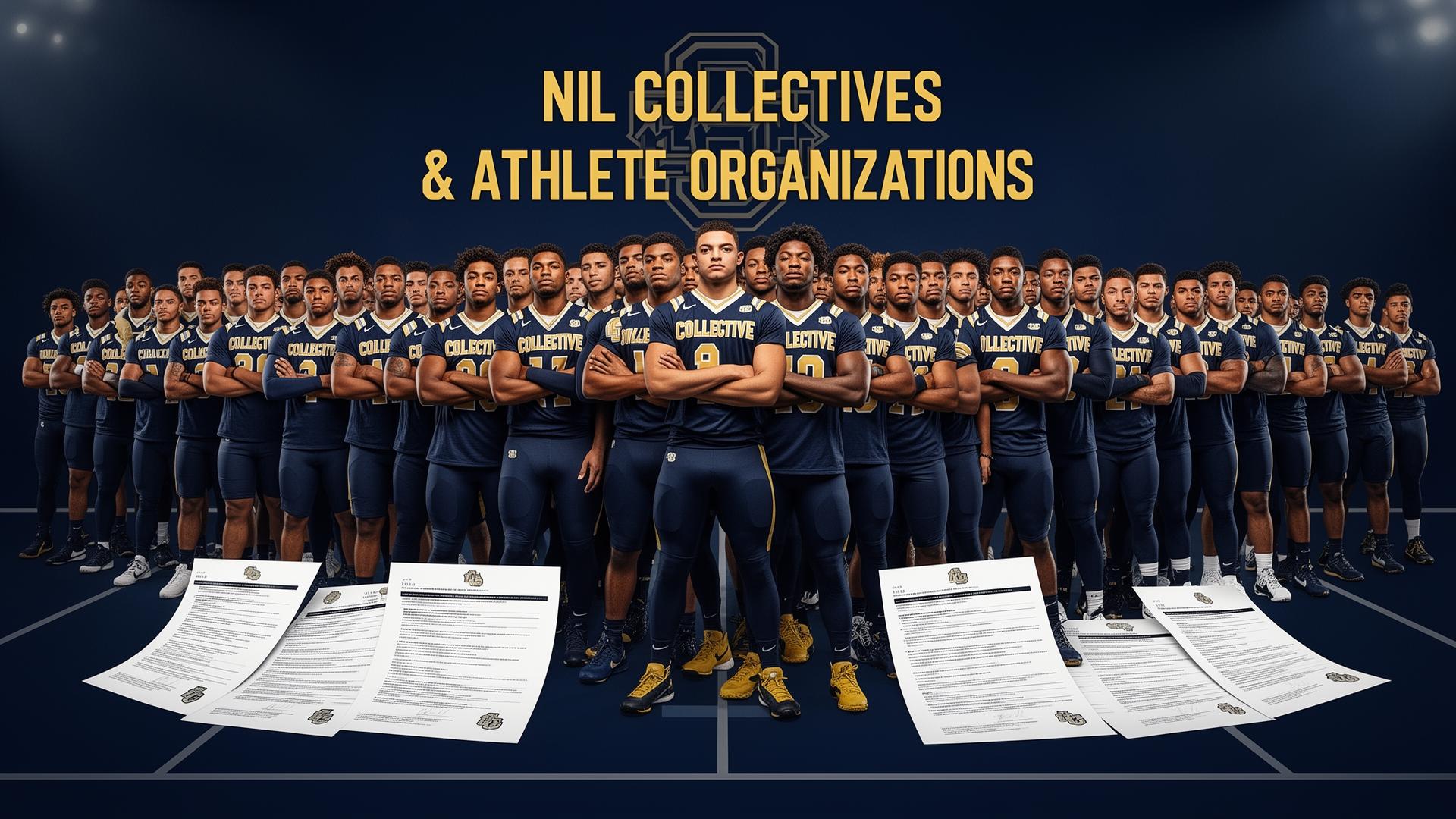
The Rise of Collectives in NIL Contracts: What Athletes Need to Know
By Andrew R. Jacobs, Esq. | Founder & Managing Attorney, Jacobs Counsel LLC | Director, Sports, Entertainment & Gaming Initiatives, Seton Hall University School of Law | Super Lawyers Rising Star 2026
The landscape of Name, Image, and Likeness (NIL) is evolving at a breakneck pace. While individual brand deals were the initial focus, a new and powerful player has emerged: the NIL collective. These organizations have quickly become a dominant force, creating millions of dollars in opportunities for student-athletes across the country. But what exactly are they, and how do they work?
For college athletes and their families, understanding collectives is no longer optional—it's essential. These groups present both incredible opportunities and significant risks. This guide will break down what NIL collectives are, how they operate, and what you need to know to engage with them safely and effectively while protecting your eligibility.
What is an NIL Collective?
An NIL collective is an organization created to pool funds from a university's alumni, boosters, and fans to create NIL opportunities for student-athletes at that specific institution. Instead of an athlete seeking out individual deals with local businesses, a collective acts as a centralized marketplace, connecting athletes with a steady stream of income-earning opportunities.
These groups are independent of the universities they support, though they are often run by prominent alumni or donors. Their primary mission is to ensure their school's athletes are well-compensated, which in turn helps the school's teams remain competitive in recruiting and retaining talent. They come in various forms, from registered non-profits focused on charity work to for-profit LLCs that function more like marketing agencies.
How Do Collectives Operate?
Collectives work by raising money from supporters and then using that capital to pay athletes for NIL-related activities. The structure of these arrangements is key to their compliance with NCAA rules.
Here's a typical model:
Fundraising: The collective raises money through donations, subscriptions, or memberships from a fan base. A fan might pay $50 a month to join the collective and support the athletes.
Creating Opportunities: The collective then designs activities for athletes to participate in. The key here is that these activities must constitute actual work, or what the NCAA calls a quid pro quo (something for something).
Executing Deals: Athletes sign contracts with the collective to perform these tasks in exchange for compensation. The payments are often structured as recurring monthly stipends or lump sums for specific projects.
Examples of common collective-driven NIL activities include: Appearing at charity events or fundraisers, participating in youth sports camps or clinics, creating social media posts promoting the collective or a partner organization, signing autographs at donor events, and appearing in digital content like podcasts or video series produced by the collective.
The fundamental principle is that the athlete is being paid for their services, not just for being on the team. This distinction is what separates a compliant NIL deal from prohibited "pay-for-play."
📥 Free Download: NIL Revenue Sharing Guide
A college athlete's guide to unlocking your share of NIL revenue.
Download Free GuideThe Benefits: Why Athletes Work with Collectives
Collectives have become popular for a reason. They offer significant advantages, especially for athletes who may not have a massive social media following or national recognition.
Consistent Income: Many collectives offer stable, recurring payments, providing athletes with a predictable source of income that is difficult to achieve through one-off brand deals.
Access for All: Collectives often aim to support entire teams or groups of athletes, not just the star quarterback. This means offensive linemen, swimmers, or gymnasts who might otherwise be overlooked can access meaningful NIL opportunities.
Simplified Process: Working with a collective can be more straightforward than sourcing individual deals. The collective handles the fundraising and deal creation, allowing the athlete to focus on their academic and athletic commitments.
Community Engagement: Many collective activities involve charitable work or community outreach, allowing athletes to build their personal brand while making a positive impact.
The Risks: What Athletes Need to Watch Out For
While the benefits are clear, engaging with collectives carries real risks. A misstep can jeopardize your eligibility, so it's crucial to approach these opportunities with caution and professional guidance.
NCAA Compliance and "Pay-for-Play"
The NCAA has been very clear: collectives cannot pay athletes simply for playing a sport, nor can they be used as an inducement to recruit a player to a specific school. The line can be blurry. A deal offered to a high school recruit before they enroll could be viewed as an improper inducement. A contract with vague or non-existent duties could be deemed a pay-for-play scheme.
Actionable Advice: Make sure any deal you sign with a collective includes specific, documented deliverables. You must be doing legitimate work in exchange for the payment. Keep records of the work you perform, such as photos from an event or screenshots of social media posts.
Unfavorable Contract Terms
Like any contract, a collective agreement can contain unfavorable terms. A desperate or poorly advised athlete might sign a deal that is overly restrictive, has an excessively long term, or includes exclusivity clauses that prevent them from pursuing more lucrative individual deals.
Actionable Advice: Never sign a collective contract without having it reviewed by an experienced attorney who specializes in sports law. They can identify red flags, negotiate fairer terms, and ensure the agreement complies with state laws and university policies.
Lack of Transparency and Professionalism
Not all collectives are created equal. Some are well-funded, professionally managed organizations, while others are loosely organized groups run by fans with good intentions but little business or legal expertise. A poorly run collective could fail to make payments, provide bad tax advice, or collapse entirely, leaving athletes in a difficult position.
Actionable Advice: Vet the collective itself. Who is running it? Are they reputable business people? Ask questions about their structure, funding, and track record. A professional operation will be transparent and willing to answer your questions.
University and State Law Conflicts
Your university has its own set of NIL policies, which may restrict the types of deals you can make or require you to disclose all agreements. Additionally, some states have specific NIL laws that govern contracts. A collective deal could inadvertently violate one of these rules.
Actionable Advice: Before signing, always consult your university's athletic compliance office. They can help you understand the school's specific rules and ensure your deal does not create any eligibility issues.
How to Engage with Collectives Responsibly
Navigating the world of collectives requires a proactive and professional approach.
Build Your Team: Do not do this alone. Work with a trusted team of advisors, including a qualified attorney and a vetted agent or marketing representative.
Review Every Detail: Treat a collective contract with the same seriousness as any professional agreement. Understand the scope of work, compensation, term, and any restrictions.
Document Everything: Keep meticulous records of your contract and the work you perform. This documentation is your best defense if your compliance is ever questioned.
Communicate with Compliance: Maintain an open line of communication with your school's compliance office. Disclose your deals as required and ask questions when you are unsure about a rule.
NIL collectives are reshaping the financial reality for student-athletes. They offer a powerful pathway to earning significant income and building your brand. By approaching these opportunities with knowledge, caution, and the right team of advisors, you can harness their power while safely protecting the athletic career you have worked so hard to build.
Legal Disclaimer: This article is for informational purposes only and does not constitute legal advice or create an attorney-client relationship. Laws vary by jurisdiction and change frequently. Nothing in this post should be relied upon as a definitive legal conclusion for any specific situation. Consult a qualified attorney before taking action based on any information here.
About the Author
Andrew R. Jacobs, Esq.Founder & Managing Attorney at Jacobs Counsel LLC. Director of Sports, Entertainment & Gaming Initiatives at Seton Hall Law. Super Lawyers Rising Star 2026. Licensed in NY, NJ & OH.
Read full bio →Continue exploring NIL & College Athlete Compensation
Go deeper on this topic
NIL Revenue Share Guide (Explainer)
How the NCAA House settlement and 22% revenue share works for college athletes.
Read moreAthlete Business Playbook
From college NIL deals to retirement: structuring your athlete business.
Read moreMedia & NIL Licensing Services
NIL contract review, deal negotiation, and brand licensing — fixed-fee scopes.
Read moreFound this helpful?
NIL Revenue Sharing Guide
A college athlete's guide to unlocking your share of NIL revenue.
Related Articles
Navigating Endorsement Deals: Red Flags Every Athlete Should Know
Endorsement deals can be career-defining opportunities or career-ending mista…
AthletesSocial Media Rights in Athletic Contracts: Who Owns Your Content?
Your social media presence is one of your most valuable assets as an athlete.…
AthletesTransfer Portal & NIL: Legal Considerations for College Athletes
The college athletics landscape has been fundamentally transformed by two maj…
Keep Learning
More insights on Athletes legal strategies
NIL Revenue Sharing Guide
A college athlete's guide to unlocking your share of NIL revenue.
NIL Basics: A Guide for College Athletes
The world of college sports has changed. For decades, student-athletes were barred from earning money from their athletic fame.
How to Negotiate NIL Deals Like a Pro: Tips for Athletes
The opportunity to profit from your Name, Image, and Likeness (NIL) has transformed what it means to be a college athlete.
Enjoyed this article?
Get weekly legal insights delivered straight to your inbox. We keep it brief and useful.
Need Legal Support?
We help high-performing creators, athletes, and founders protect their brands and build sustainable businesses.